What Age Do Footballers Retire? Averages by Position
Most male pro footballers retire between 34 and 36, JobsInFootball reports. KiqIQ says goalkeepers often play to 38 or older. Ages by position.
According to a 2026 guide from KiqIQ, a football site for bettors and fantasy managers, the average professional footballer retires between the ages of 33 and 35. Another outlet, JobsInFootball, suggested a range of 34 to 36 for male professionals, while a 2022 analysis by GraspTheGame calculated a single average of 36.
Last updated: October 2026
A player’s position has a significant effect on career length, KiqIQ notes. Goalkeepers consistently play for longer than their outfield teammates, often continuing into their late 30s or even early 40s. In contrast, players who rely on pace, such as wingers and some forwards, tend to retire earliest as their physical attributes decline.
Average Retirement Age by Position
Estimates for retirement age vary by position, and different analyses use different categories and data. A short 2026 guide from KiqIQ gave rough typical age ranges without publishing its data, while a 2022 study from GraspTheGame calculated specific averages from data on professional players from 1995 up to the time of its analysis.
The findings show a clear advantage for goalkeepers, but disagree on which outfield positions last the longest.
| Position | Typical Retirement Age (KiqIQ, 2026) | Average Retirement Age (GraspTheGame, 2022) |
|---|---|---|
| Goalkeeper | ~37–39 years | 38.59 years |
| Centre-Back | ~34–36 years | 34.18 years (all defenders) |
| Full-Back / Wing-Back | ~32–34 years | 34.18 years (all defenders) |
| Midfielder | ~32–34 years | 35.21 years |
| Attacking Midfielder / Winger | ~31–33 years | Not specified |
| Forward | ~32–34 years | 36.26 years |
The GraspTheGame analysis noted its own surprise at finding that forwards in its dataset enjoyed the second-longest careers on average, while defenders retired earliest. This contradicts the more conventional view, reported by KiqIQ, that pace-dependent forwards and wingers are the first to hang up their boots.
Why Do Goalkeepers Play for Longer?
Goalkeepers’ longevity is a well-established phenomenon in football, supported by data on both retirement and the age of active players. KiqIQ puts it down mainly to a lighter physical load, less reliance on pace and the value of experience.
According to KiqIQ, goalkeepers have a lower physical load, covering 4-5 km per match compared to 10-12 km for many outfielders. Their role relies more on positioning, reactions and decision-making — qualities that, KiqIQ says, decline more slowly than pace.
A 2026 analysis of top-flight squads by FootyFox illustrated the result. It found that a high percentage of goalkeepers in the Champions League, Premier League and La Liga were aged 30 or over. For other positions, the figure was much lower.
Percentage of Registered Players Aged 30 or Over (2026)
| Position | 30 or Over | 35 or Over | Source |
|---|---|---|---|
| Goalkeeper | 45.3% | 13.2% | FootyFox |
| Defender | 18.0% | 2.0% | FootyFox |
| Midfielder | 14.9% | 1.4% | FootyFox |
| Forward | 12.0% | 1.7% | FootyFox |
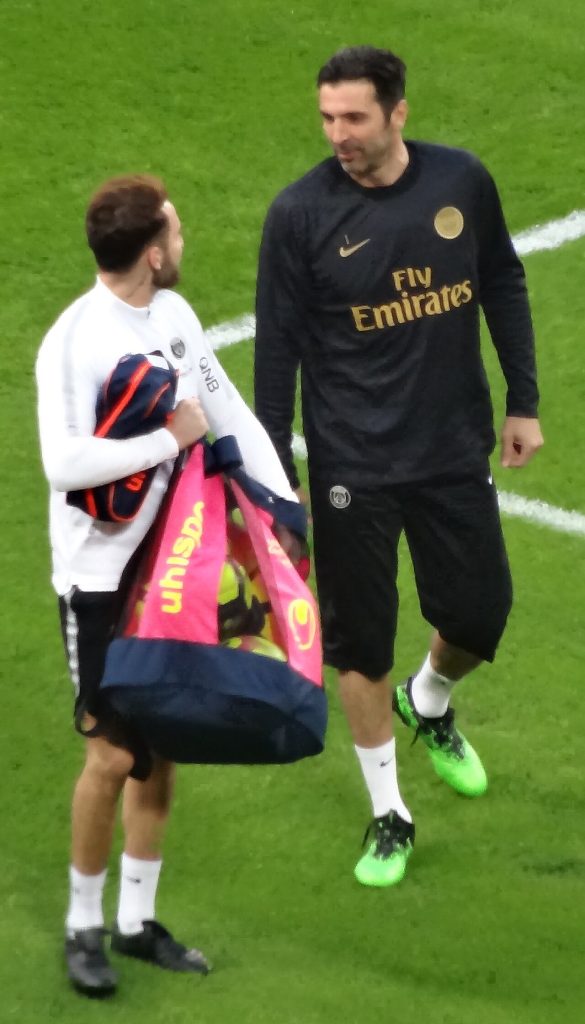
Experience is also valued more highly in goalkeepers, with many clubs happy to retain veterans as second or third choice. In July 2026, FootyFox noted that Manchester United’s Tom Heaton and Bayern Munich’s Manuel Neuer were both 40. Other examples of longevity include Gianluigi Buffon, who played until he was 45 according to KiqIQ, and former Porto defender Pepe, who played top-flight football into his 41st year before retiring in 2024, as reported by JobsInFootball.
The Player’s Peak and the ‘Aging Curve’
A 2016 study cited by GraspTheGame concluded that the average player peaks between the ages of 25 and 27. The study specified that attackers tended to peak earliest, at around twenty-five, while defenders peaked later at 27.
This aligns with financial data. A 2019 academic study of Champions League players found that a player’s market value follows an “inverted-U curve”, hitting its highest point in the 26–30 age range before declining. This reality has long influenced club transfer and contract strategies. GraspTheGame noted that former Arsenal manager Arsène Wenger was a big supporter of offering only shorter contracts to players over thirty, and is thought to have believed a player was physically finished by that age.
With players typically making their professional debut between 18 and 22, the peak years come and go quickly. KiqIQ reported that the average professional career lasts only 8-10 years. This short window to build a career and secure a financial future is one of the biggest challenges for any young player trying to learn how to become a professional footballer.
However, modern sports science may be extending this window. The same 2019 study found an “aging trend” in the Champions League, with the average player age increasing from 24.9 to 26.5 years between the 1992–93 and 2017–18 seasons.
Injuries, Burnout and Falling Out of Love
While age is the ultimate barrier, many careers are cut short by other factors. Injuries are among the most common reasons for retirement, according to GraspTheGame. Some are the result of a single, devastating incident. JobsInFootball highlights the case of Aston Villa forward Luc Nilis, whose career was ended in 2000 after a collision with a goalkeeper shattered his leg in two places. It is a stark reminder that football is a contact sport.
More often, it is the cumulative toll of recurring injuries that forces a player to stop. Dutch striker Marco van Basten, a three-time Ballon d’Or winner, was forced to retire at 30 after a long battle with an ankle injury, according to JobsInFootball. Michael Owen admitted that his intense workload as a teenager shortened his career, writing on his blog in 2012 that it was the manager’s responsibility to rest young players; he retired at the age of 33, JobsInFootball reported.
The mental side can also end a career early, although GraspTheGame lists burnout and mental health problems among the less common causes. Several high-profile players have retired early after simply losing their passion for the professional game. David Bentley, who earned seven caps for England, retired at 29. According to GraspTheGame, he said he had simply fallen out of love with football, describing how the game had become “robotic” and that he found it boring and predictable.
Former Manchester City prodigy Michael Johnson retired at just 24 after suffering from injuries and mental health problems. GraspTheGame reported that he struggled with being defined only as a footballer and felt there must be more to life. The transition out of the sport is a challenge for many, with KiqIQ reporting that research from FIFPRO and the PFA found around 30% of ex-professionals report mental health difficulties within two years of retiring.
Sources
- KiqIQ: What Age Do Footballers Retire? Career Length and Position Effects, May 2026
- Jobs In Football: What Age Do Soccer Players Usually Retire? (And 5 Reasons Why)
- Grasp The Game: When Do Soccer Players Retire? | Statistical Analysis, December 2022
- FootyFox: Average age by position: why goalkeepers outlast everyone, July 2026
- PMC (NCBI): Are Soccer Players Older Now Than Before? Aging Trends and Market Value in the Last Three Decades of the UEFA Champions League, January 2019
FAQ
What is the average age footballers retire?
Recent reports give slightly different ranges. KiqIQ estimated in 2026 that most footballers retire between 33 and 35, while JobsInFootball suggested a range of 34-36.
Which position plays the longest?
Goalkeepers have the longest careers, often playing until they are 38 or older, according to KiqIQ. This is due to the lower physical demands of the position and the high value placed on experience.
How long is a typical professional football career?
According to a 2026 guide from KiqIQ, the average professional football career lasts between 8 and 10 years.
At what age do footballers peak?
A 2016 study cited by GraspTheGame found that players typically reach their peak performance between the ages of 25 and 27. Attackers tend to peak earliest (around age twenty-five), while defenders peak later.
Why do some footballers retire early?
Injuries are the most common reason, according to GraspTheGame, alongside declining performance and moves into coaching or other jobs in the game. It lists burnout, mental health problems and illness as less common causes. JobsInFootball also counts loss of hunger and mental load among the most common reasons players stop.